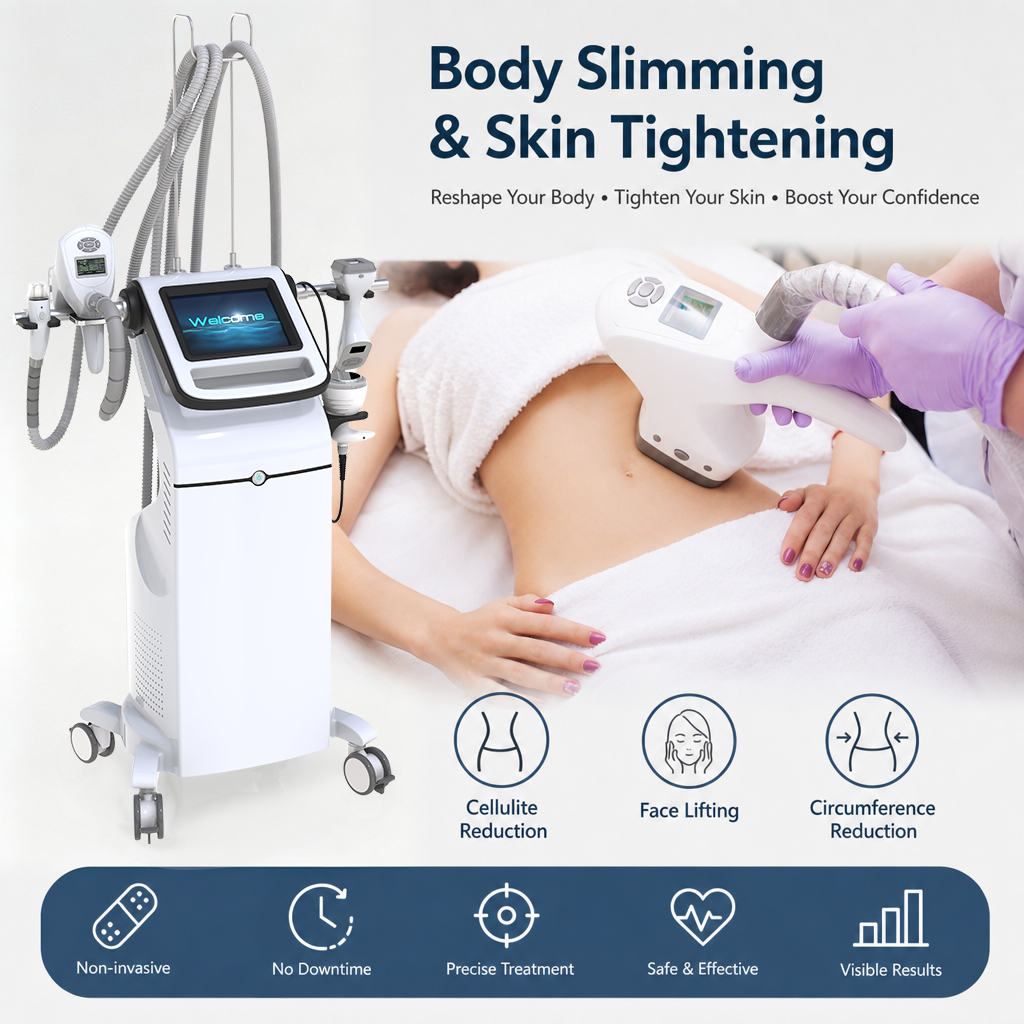
VL9 4-in-1 40K Cavitation Vacuum RF and 940nm Laser Body Contouring Machine
$0.00
描述
The Machine
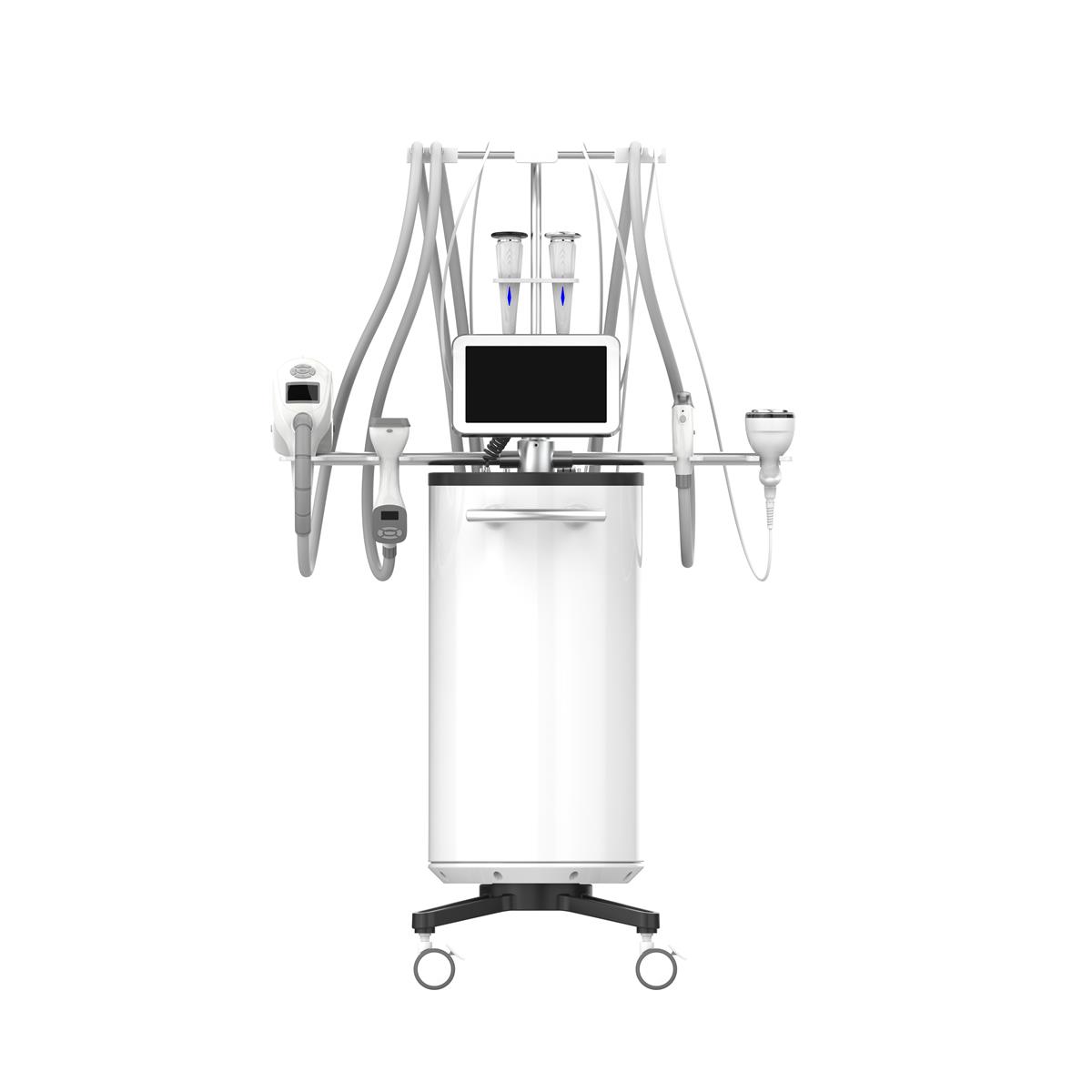
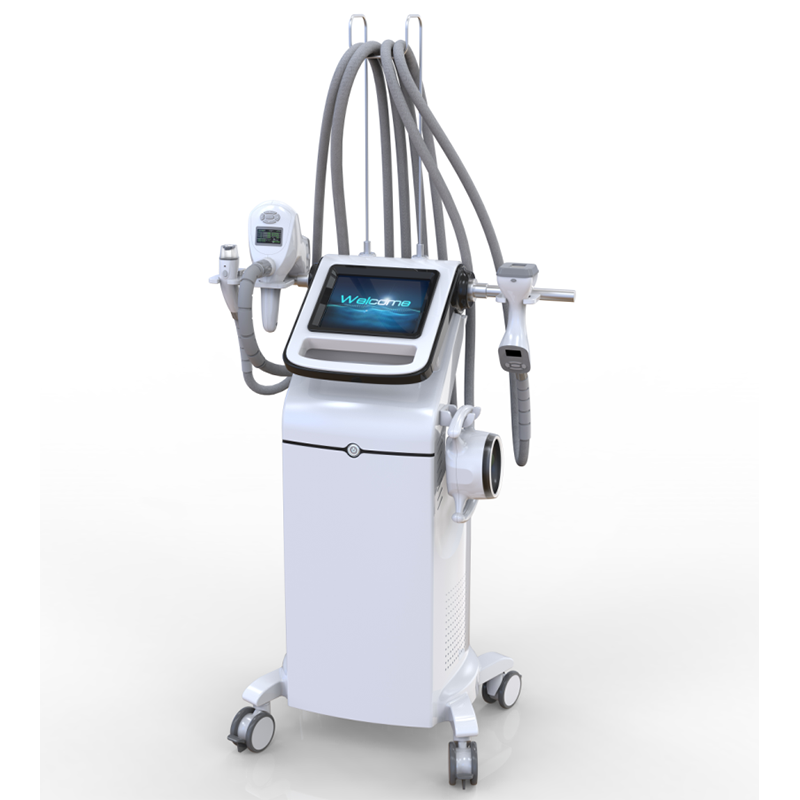
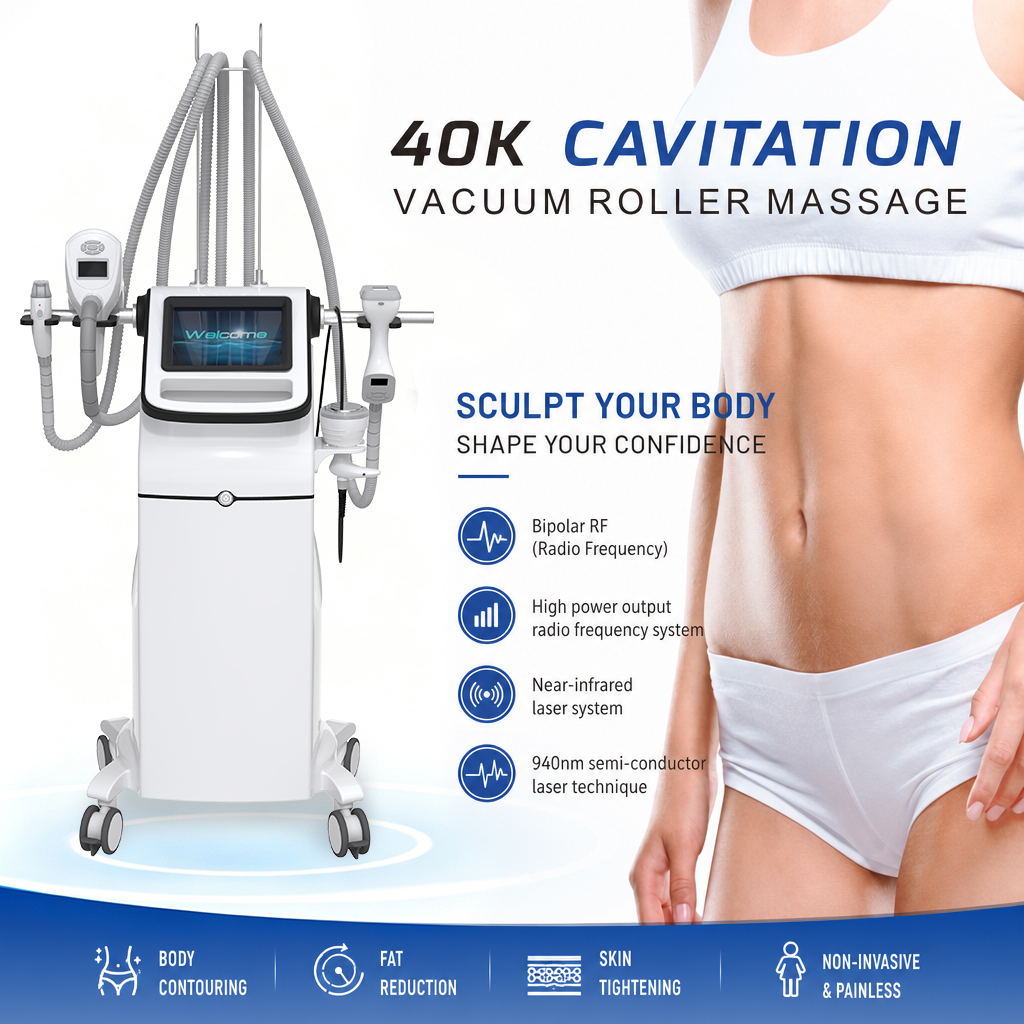
The VL9 is a 4-in-1 vacuum roller system: bipolar radio frequency, 940 nm near-infrared laser, powered vacuum with a mechanical roller, and 40 kHz cavitation — four energy types, four handpieces, one floor-standing console.
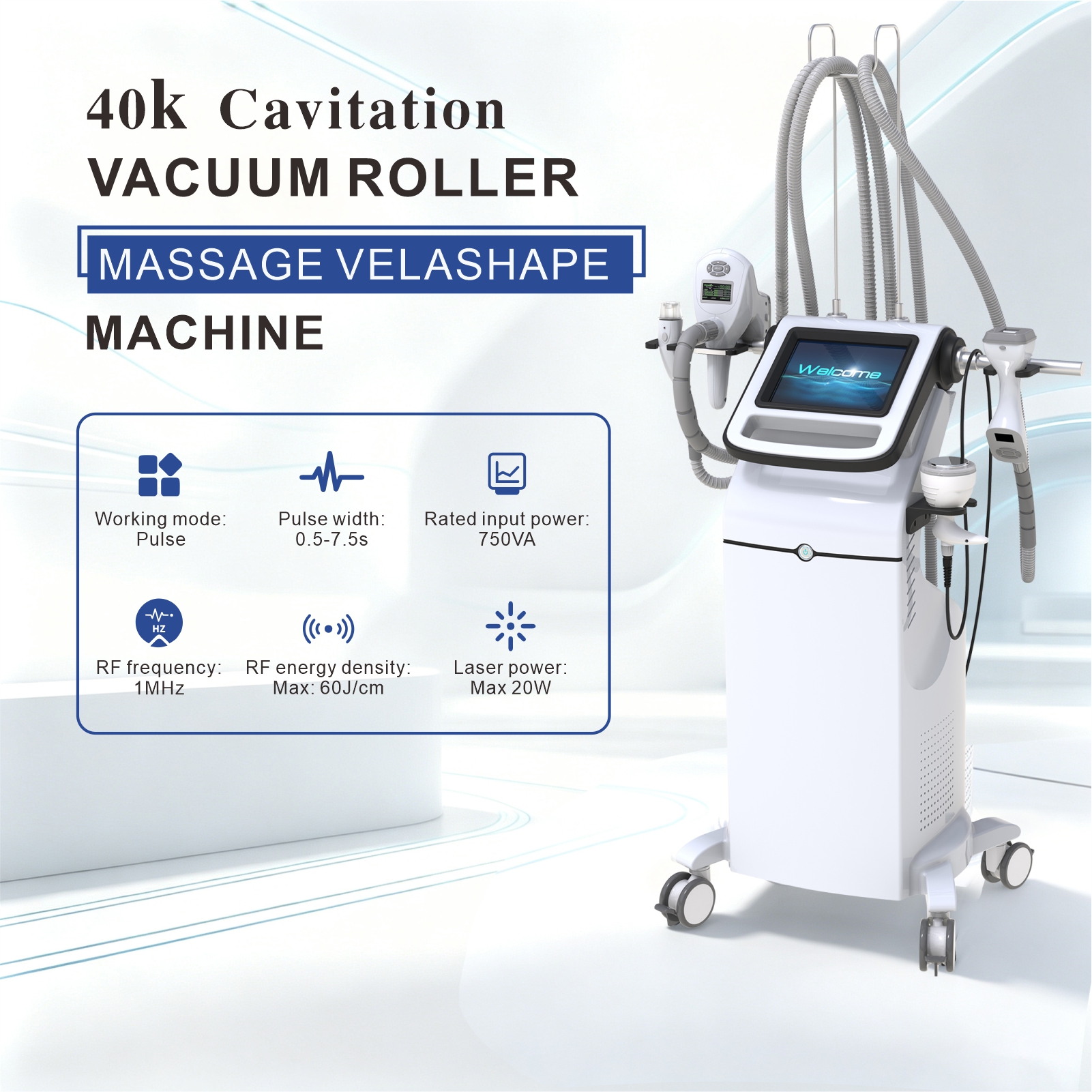
This is the specification that body-contouring clinics actually buy, and the numbers on this page are the manufacturer’s own: 750 VA input, 1 MHz bipolar RF, RF energy density up to 60 J/cm, laser output up to 20 W, pulse width 0.5–7.5 s. Those are the figures a buyer compares, so they are stated up front rather than buried.
What Is Actually Happening at the Skin
Each of the three vacuum-RF heads is a single assembly doing four jobs at once:
Vacuum lifts a fold of tissue into the handpiece and holds it there, so the energy is delivered into a controlled volume instead of dissipating off the surface.
The roller moves across that lifted fold and kneads it mechanically — the same action as a deep manual massage, at a consistency no therapist maintains over a full day.
Bipolar RF at 1 MHz heats the dermis. The two electrodes sit at a fixed spacing on the head, so the field is defined by the geometry of the handpiece rather than by how hard the operator presses. The manufacturer specifies the effective depth at 4–15 mm, which is the layer that holds both the collagen and the fat.
940 nm near-infrared laser passes through the skin without being absorbed by the surface. It is invisible — the manufacturer notes it can only be seen through a camera — which is why the treatment feels like warmth and pressure rather than like light.
940 nm: How the Fat Actually Leaves
This is the part worth understanding, because it is what separates a laser-assisted body treatment from heat alone.
When the 940 nm beam reaches the fat layer, the adipocyte responds by changing its membrane permeability. The cell opens. Water, glycerol and free fatty acids move out of the cell and into the interstitial space beneath the fat layer — and from there they are carried away by the lymphatic system and metabolised.
The fat cell is not destroyed. It is emptied and reduced in size, and the remaining cells reorganise more closely together.
That distinction matters for how the treatment is sold and how it is scheduled: the result is a volume change that the body has to clear, which is why sessions are spaced and why the drainage component is not optional.
40 kHz Cavitation
The fourth handpiece is the cavitation head, running at 40 kHz — the frequency at which ultrasound produces the pressure cycles that disrupt adipocyte membranes.
Where the laser empties cells and the RF tightens the skin above them, cavitation breaks the cells down outright, and the contents are drained by the body’s own clearance. It is used on the areas with the densest fat — the abdomen, the flanks, the outer thigh — and typically as the first pass in a session.
Four Handpieces
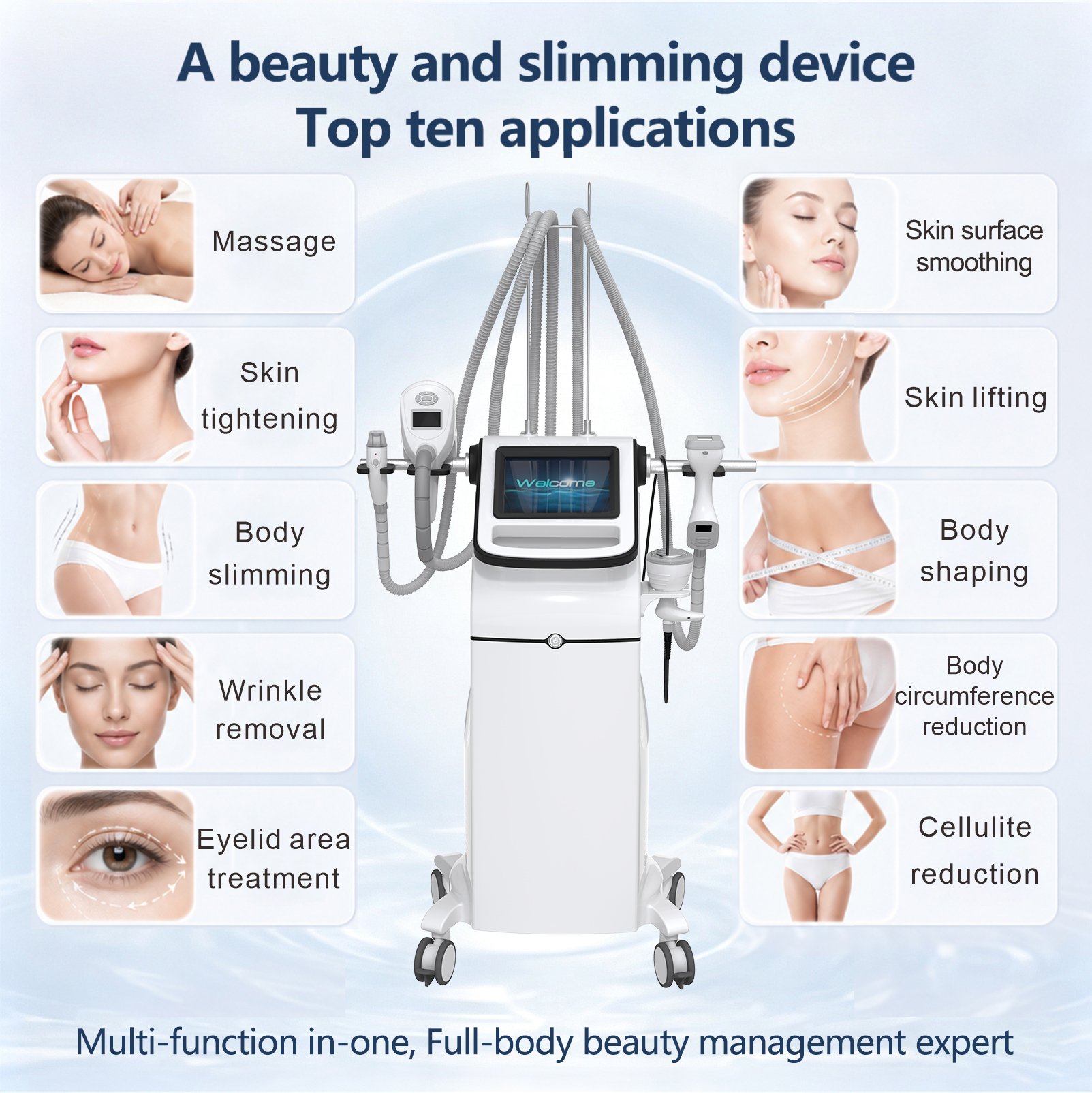
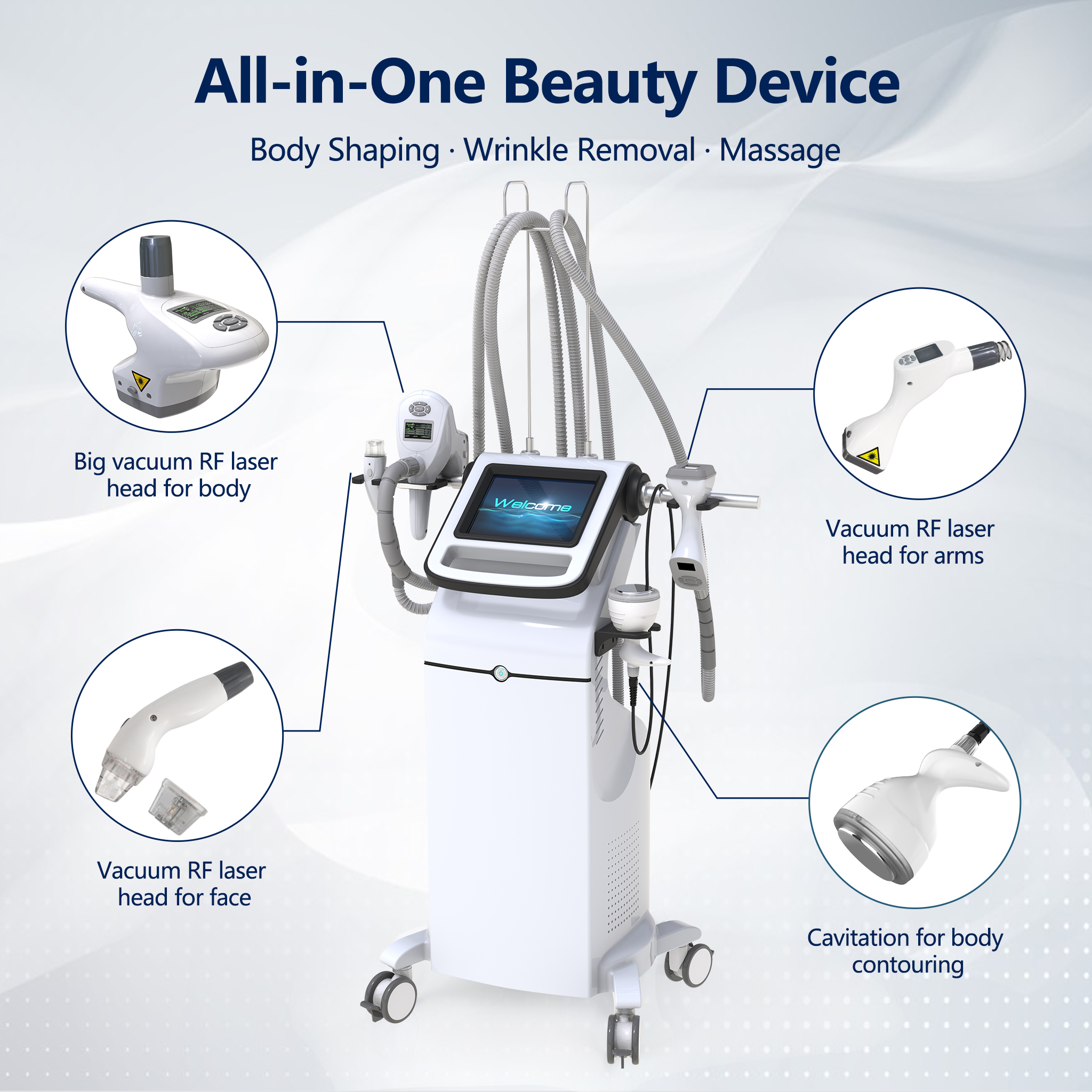
Big vacuum RF laser head — body. Abdomen, buttocks, side waist. The largest contact area and the highest energy delivery, for the areas where volume is the concern.
Vacuum RF laser head — arms. Arms, legs and facial slimming, plus skin tightening, massage, surface smoothing and fat appearance improvement. The general-purpose head.
Vacuum RF laser head — face. Skin tightening, face lifting and eye lifting, on the smallest contact area of the set.
Cavitation. Wrinkle reduction, circumference reduction, cellulite reduction, surface smoothing and body shaping.
The three vacuum heads share one mechanism at three sizes; the cavitation head is a different energy entirely. Between them, a full protocol runs face, arms, body and cavitation in a single session without changing machines.
Build and Operation
A white floor-standing tower on four castors, with the touchscreen at chest height and the handpiece hoses carried on a rail above the column so the leads hang clear rather than trailing across the client.
Everything is set on the screen — there are no separate analogue controls to calibrate, and the working mode is pulse with an adjustable pulse width from 0.5 to 7.5 seconds, which is the parameter that governs how much energy each pass deposits before the tissue has time to cool.
The manufacturer’s stated advantages are the ones that matter commercially: no injection, no wound, no drugs and no anaesthesia in the process; simple touchscreen operation; and no downtime, so a client can be treated in a lunch break.
Specifications
Who It Suits
Body-contouring clinics that need fat reduction and skin tightening in one platform — the RF is what prevents the laxity that cavitation alone leaves behind.
Clinics treating both face and body: the three vacuum heads scale from the eye area to the abdomen, so one machine covers a menu that normally needs two.
Practitioners who want a laser-assisted protocol — 940 nm adds a mechanism that neither RF nor cavitation provides, and it is the part of the specification that differentiates the unit from a standard vacuum-RF machine.
Distributors selling into markets where the buyer reads the datasheet before the demo: 750 VA, 1 MHz, 60 J/cm and 20 W are the four numbers that close that conversation.
Support
Protocol guidance on handpiece sequencing, pulse width by treatment area and session intervals is available on request. The consumable items are the vacuum cup seals and the coupling gel; the handpieces and the laser source are reusable.
Ordering
State the destination market when enquiring and we will confirm the plug standard, voltage configuration, labelling and packaging for that market before the order is placed.